
One of our three areas
Scars and Skin Texture: Where Injectables Fit
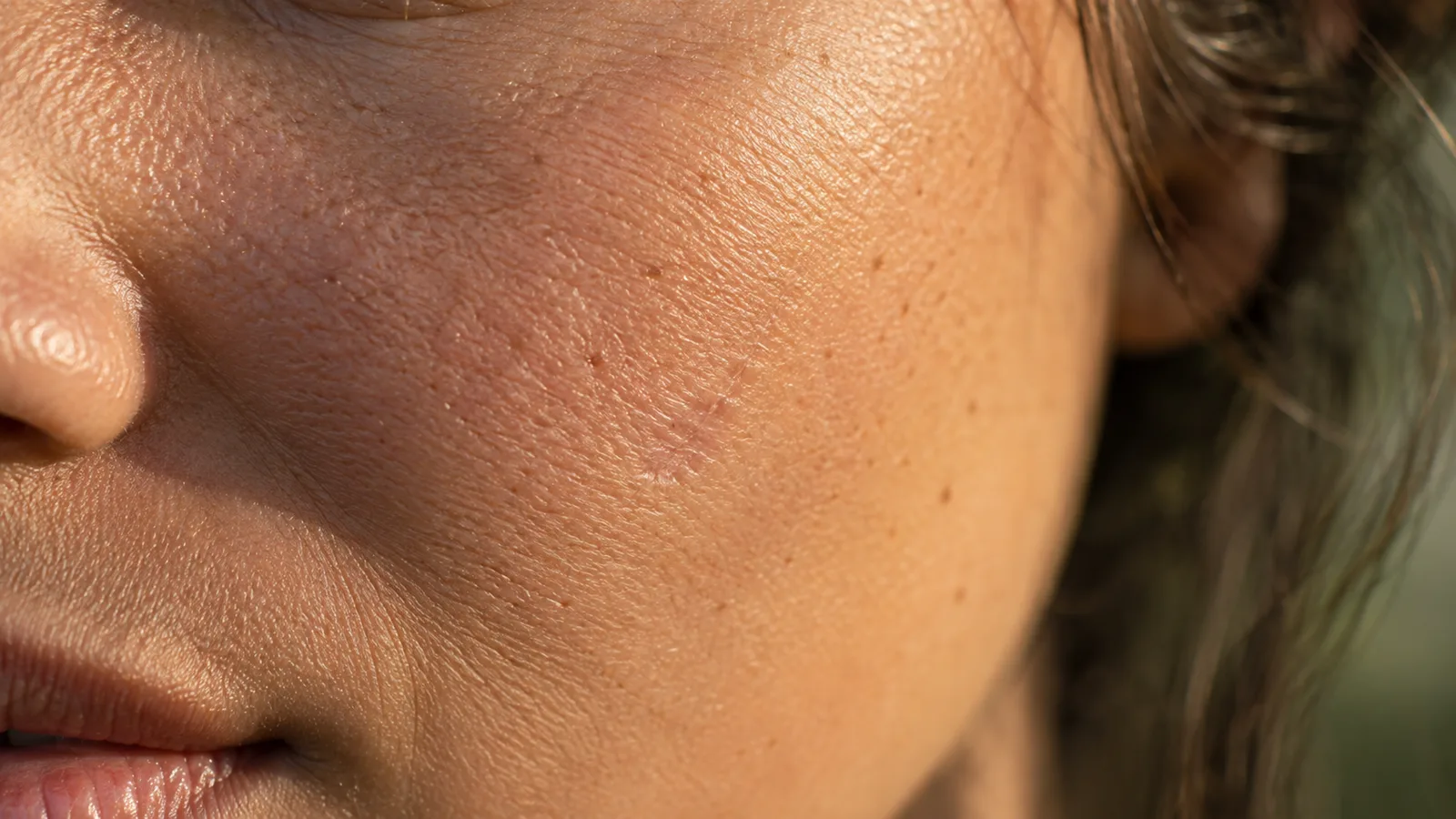
Too little, because many people do not realize that depressed scars, uneven texture and the shadows they cast can be improved meaningfully with the right sequence of treatments.
This hub gathers our coverage of scars and skin texture. The emphasis is on sequence and timing, because with scars the order of treatments matters as much as the products themselves.
Reading a scar before treating it
A scar behaves differently from the skin around it, and the difference decides which injectable, if any, can help.
Why scars are different
A scar is not simply a mark. It is a patch of skin where the normal architecture has been replaced with collagen laid down in a hurry. That replacement tissue behaves differently from the skin around it.
It may be tethered to deeper layers, pulling the surface down into a pit. It may be thinner, so it catches light differently.
It may still be remodeling, which in practice means the scar you see at six months is not the scar you will see at eighteen.
Injectables work with that biology rather than against it. Fillers lift a depressed scar by adding volume underneath it, so the surface sits level with the surrounding skin and stops casting a shadow.
Subcision, a small needle technique often paired with filler, releases the fibrous bands that tether a scar down. Biostimulator injectables encourage the skin to build its own collagen over months.
Skin boosters improve the texture of the skin between scars, which changes how the whole area reads even when individual scars are unchanged.
In practical terms, the next point is that not every scar responds. Rolling scars, the soft-edged depressions that shift when the skin is stretched, respond best to filler and subcision. Boxcar scars with sharp edges respond partially.
Ice pick scars, the narrow deep pits, generally do not respond to injectables and are referred to other techniques.
What Los Angeles adds to the picture
Scar work is slow, and it is planned across seasons. Readers here often schedule the more aggressive steps for the cooler months, when sun exposure is easier to control, and hold the lighter maintenance steps for summer.
That is a local habit we hear about often enough to treat as a pattern.
The city is also home to research institutions whose public communications cover skin science regularly. UCLA's newsroom publishes plain-language summaries of dermatology research that readers may find useful as background.
For deeper reading, the collections at the downtown Central Library are open to the public.
Where readers go from here
Brow and forehead coverage lives in the brow hub. Neck and jawline questions are gathered in the neck hub. If your scar question is not answered here, send it through the Write to Us page and we will consider it for a future article.
What readers ask us
How soon after a scar forms can it be treated with filler?
Will filler make a scar disappear?
Is one session enough?
A note from the family
Our editorial view
We are independent, non-clinical editors without a medical license, so what follows is a reading position rather than clinical advice. Sorted plainly, the evidence for scar injectables is strongest where the problem is depth and weakest where it is color or surface texture.
Most of the disappointment we hear about comes from treating the second with tools built for the first.
The reader weighing filler or subcision for a scar is best served by learning the three shape names first, then reading how one clinic describes its own scar work with that vocabulary in mind.
The decision itself belongs with a licensed clinician who has examined the scar. Our job ends at the point where the questions are clear.
Articles in this hub
- 01 Volume Loss Around Scars: How Fillers Are Used to Lift Depressed Scars Why some scars sit low, how filler and subcision lift them, and what limits to expect.
- 02 Dermal Fillers for Acne Scars: Types, Placement and Limits How hyaluronic acid and biostimulator products differ in scars, which scar types respond, and what a consultation should cover.
- 03 Scar Treatment Timing: How Long to Wait Before Injectables How scars mature, the waiting windows injectors commonly use, and how to plan a sequence across a year.